



Call us now:
Monday – Friday: 8:00am – 6:00pm; Saturday: 08:00am – 12:00pm; Sunday: Closed
Call us now:
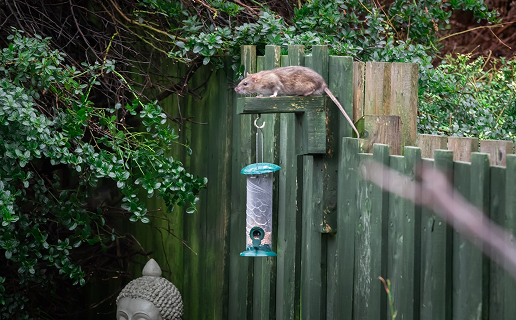
If you’ve suddenly spotted rats in your garden, the first instinct is usually to blame bird feeders, bins, compost, or overgrown hedges.
And yes, those things can make your garden more attractive to rats.
But in my experience as a plumbing and drainage engineer, one of the biggest causes of repeat rat problems in gardens is something most homeowners don’t always think to check: their drains.
The team at Bromley Plumbers get called out for rat-related drain issues once or twice a week. A lot of people are surprised when I tell them that rats in the garden often aren’t really a “garden problem” at all, they’re an underground drainage problem that just happens to show itself outside first.
If you want to know how to get rid of rats in your garden properly, you need to understand why they’re there in the first place.
Rats are brilliant at finding safe routes in and out of properties. Drains and sewer pipes are like underground motorways for them.
They can travel through pipework, move between properties, and surface wherever they find a weakness, whether that’s a broken pipe, a damaged manhole cover, or a gap around a drain. A lot of the time, homeowners only notice the rats once they start seeing signs in the garden.
Normally, what we see first is small rat-sized holes (usually around three or four inches wide) appearing near drain covers, manholes, patios, or along fence lines. They basically dig through anything.
If there’s a weak spot in the drainage system underneath, rats will often come up through the drain, forage outside, and then disappear straight back underground.
That’s why traditional pest control such as deterrent sprays and ultrasonic repellents can sometimes feel like it works for a few weeks, only for the problem to return.
You’re treating the rats you can see, but not the route they’re using to get there.
One of the clearest signs of rats in your garden is fresh burrowing activity.
Rat holes in gardens are usually:
You might also notice:
If the holes keep appearing in the same areas (especially near drainage points) that’s often a big clue that rats are coming from below rather than nesting entirely in the garden.
A lot of homeowners don’t realise the problem has spread indoors until something starts smelling a bit off.
One of the most common issues we see is rats chewing through flexible toilet waste pipes, also known as flexible pan connectors.
These are the white plastic connectors often used behind toilets, especially with back-to-wall toilets where the pipework is boxed in and hidden.
Because the pipes are concealed, you often don’t know there’s damage until you notice:
We’re actually dealing with a job like this right now. The rats have chewed through the flexible pan connector behind a toilet, causing a leak and giving themselves a route into the property.
In my experience, they’re often drawn to these white plastic fittings and will work their way towards them (a bit like a white light at the end of a tunnel), eventually chewing through them and gaining access into the toilet system. Rats are attracted to weak points in drainage systems. Once they find a route, they’ll keep using it. That’s why signs of rats in drains should never be ignored.
Start by checking for:
The location of the holes usually tells you a lot.
If the signs point to a drain issue, get a professional inspection. A plumber or drainage engineer, like the team at Bromley Plumbers can:
This is often the quickest way to find the source.
Even if drains are the root issue, don’t make the garden
easy for them. To help deter rats in the garden:
One of the most effective long-term drainage solutions for serious rat issues is a rat gate.
A rat gate (sometimes called a rat flap or rat stop) is a metal device fitted into the drain that allows waste to flow out but stops rats travelling back upstream into your property. We fit rat gates quite regularly. In fact, we’re fitting one today as I write this.
But this is where honest advice matters: I don’t recommend rat gates as a blanket preventative measure for everyone.
They’re useful if you’ve got a genuine recurring rat problem. But they can also cause blockages if people regularly flush wipes, sanitary products, or anything that can snag on the spikey mechanism. So, in my view, a rat gate is a targeted solution, not something every homeowner needs by default.
One job that’s always stuck with me was a lovely customer in Beckenham, Kent. She had a beautiful home, but she was having an awful time with rats.
They were everywhere… in the garden, around the bathrooms, even coming up near the bath.
Over time, rats had chewed through three separate toilet waste pipes. The whole thing was incredibly stressful for her. When we investigated, the real issue turned out to be much deeper… literally.
There was a damaged communal drain around eight metres down, which was allowing rats to move freely through the system. The frustrating part was that because it was a shared drainage issue, there were delays and arguments
between the parties involved over who was responsible for fixing it.
That’s a good example of why simply treating visible rat activity doesn’t always solve the bigger problem. Sometimes, the issue is hidden well below ground level.
This is a common question homeowners ask, and the answer depends on where the defect is.
As a general rule of thumb: If the damaged drain serves only your home before it reaches the public sewer, it’s usually your responsibility as the homeowner.
If the problem is in a shared drain or communal sewer, your water company may be responsible.
In our area, that often means Thames Water for shared sewer issues. A good plumber or drainage engineer should be able to help you work out:
Getting clarity early can save a lot of stress and wasted money.
If you’re wondering how to get rid of rats in your garden, don’t assume the answer is always traps or bait. In many cases, rats in gardens are a symptom of a hidden drainage issue, and until that’s fixed, the problem can keep coming back.
The good news is that once the source is properly identified, the right repair can make a huge difference. If you’ve noticed rat holes in your garden, bad smells indoors, or signs of rats in drains, it’s worth getting it checked sooner rather than later. If you are in our service area, contact our friendly team, we’d love to help.
The sooner you deal with the cause, the easier it is to stop the problem getting worse.
Founder & Managing Director, Bromley Plumbers
Bromley Plumbers is a trusted plumbing and drainage company serving Bromley, Beckenham, Sidcup, Croydon, and surrounding areas. Founded in 2017 by Jack Cox, the company focuses on reliable domestic and commercial plumbing services, from installations and repairs to unblocking drains. With a dedicated team of skilled engineers, Bromley Plumbers is committed to quality workmanship, local expertise, and excellent customer service.
For immediate assistance with block drains in Brockley, get in touch Our certified engineers offer prompt, efficient service for all drainage issues. call us on 0208 050 2707
18 Addington Road,
West Wickham, BR4 9BS
Monday – Friday 8:00am – 6:00pm
Saturday – 08:00am – 12:00pm
Sunday – Closed
Copyright © 2026 by Bromley Plumbers Ltd. All rights reserved. Website managed by Make Me Local.