



Call us now:
Monday – Friday: 8:00am – 6:00pm; Saturday: 08:00am – 12:00pm; Sunday: Closed
Call us now:
As a plumbing engineer, there are certain things I notice immediately when I walk into a property. Some of these shortcuts might not cause an issue straight away, but they often create problems months or even years later.
Below are a few of the most common plumbing shortcuts I see in homes, and why they can lead to trouble if they’re not addressed.
While homeowners may not notice these details, certain shortcuts stand out straight away to us plumbers when inspecting a plumbing system.
Some of the most common shortcuts we see include:
Most of the time, these shortcuts are done to save time during installation. The problem is that they can increase the risk of leaks, heating issues, or pipe damage later on.
Let’s look at the details together….
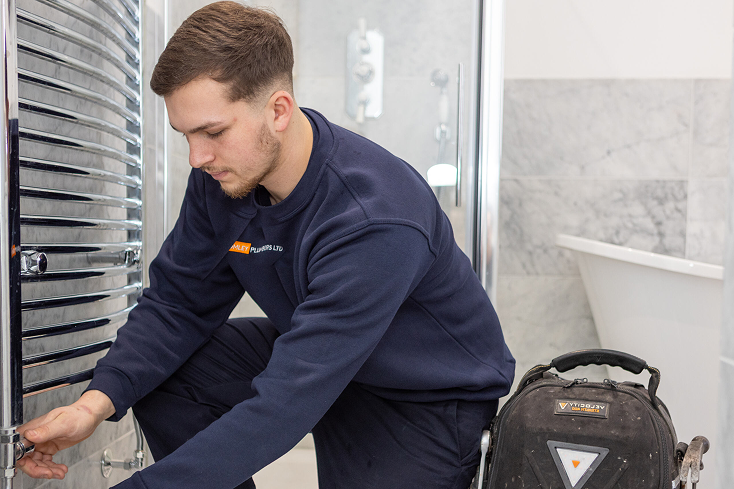
The most common bodge I come across is flexible hoses being used to connect radiators.
Flexible pipes are designed for certain plumbing connections, such as:


They’re useful because they’re quick to install and allow for some movement. However, they’re not normally intended for permanent radiator connections.
Radiators should usually be hard-piped using copper or proper heating pipework, which provides a more secure and long-lasting installation.
When flexible hoses are used instead, it often suggests someone was trying to save time or avoid installing the correct pipework. While they might work for a while, flexible connections on radiators can look untidy, be easier to damage, and reduce the overall reliability of the system.
This is one of those things that professional plumbers notice immediately because it’s simply not how heating systems are normally installed.
Typical cost to rectify
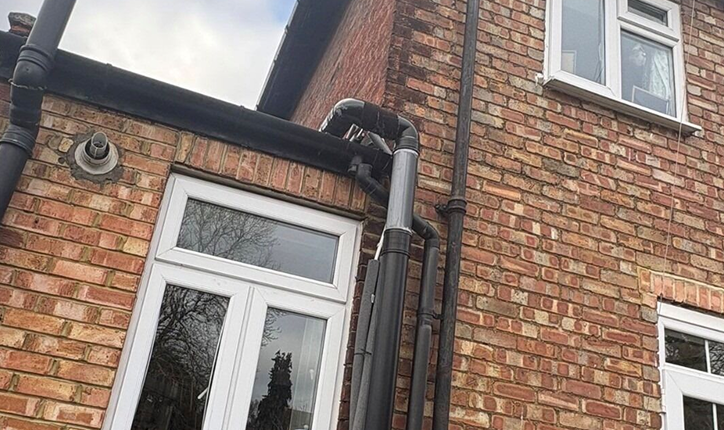
Another shortcut I sometimes see is water pipes run along the outside wall of a property, particularly when an extension has been added.
Instead of routing the pipework properly through the building, pipes are occasionally installed externally because it’s quicker during construction.
The problem with this is that external pipework is far more exposed to the elements.
In the UK especially, that can mean:
External pipes that freeze can stop water flowing entirely and, in some cases, may burst.
For homeowners, that can mean losing water supply temporarily, dealing with leaks or water damage, and needing emergency plumbing repairs. Nobody wants to be waking up to no running water or a burst pipe during freezing conditions.
Whenever possible, pipework should normally be run inside the property where it’s protected and insulated properly.
Typical cost to rectify
Another sign of poor plumbing workmanship is compression fittings that haven’t been installed properly.
A compression fitting is a common brass plumbing connection that seals using a small ring called an olive. When the nut is tightened, the olive compresses around the pipe to create a watertight seal.
One mistake I often see in DIY plumbing is PTFE tape wrapped around the thread instead of the olive.
This doesn’t actually help create the seal, because the sealing happens around the olive itself. When plumbers see PTFE wrapped around the threads, it’s usually a giveaway that the fitting was installed by someone who didn’t fully understand how the connection works.
While it might not leak immediately, it can increase the risk of problems developing later. A slow leak from a poorly sealed fitting might go unnoticed for a long time. Over time that can cause damp patches, damage to units or flooring, and mould growth.
For homeowners, it’s often the case that a simple fix could have prevented a much larger repair later on.
Typical cost to rectify
Push-fit plumbing systems are widely used today and can be perfectly acceptable when installed correctly.
However, they’re usually intended to be hidden within walls, floors, or cupboards, rather than left exposed in finished areas of a home.
In visible spaces, most plumbers prefer to install neater copper pipework, which is more durable and gives a cleaner, more professional finish.
When push-fit pipes are left clearly visible, it can sometimes suggest the installation was rushed or not finished to a professional standard. Plus, it tends to just look awful.
It doesn’t necessarily mean the system won’t work, but it’s something experienced plumbers tend to notice straight away.
Typical cost to rectify
However, this type of shortcut is often more about long-term durability and aesthetics. Homeowners often choose to correct it when renovating, selling the property, or upgrading their heating systems. But, doing it right the first time round avoids having to revisit it later.
Finally, something that often stands out to plumbers is how pipework has been routed and supported.
Good plumbing installations tend to look neat and well planned. Pipes should normally:
If pipes are left sagging, loosely supported, or routed in unusual ways, it can sometimes indicate rushed workmanship.
In some cases, poorly supported pipes (particularly if they are hidden under the floorboards) can even cause:
For homeowners, the most common sign is hearing banging or rattling pipes when water is running, which is not only annoying, but may eventually lead to leaks if left unresolved.
Typical cost to rectify
Many of these shortcuts don’t cause problems immediately, which is why they sometimes go unnoticed.
But over time they can increase the likelihood of:
If you notice anything unusual with your plumbing system – such as strange pipework layouts, flexible hoses where you wouldn’t expect them, or pipes exposed to the elements – it may be worth having a professional plumber take a look.
Often, identifying potential issues early can prevent more serious problems later.
Founder & Managing Director, Bromley Plumbers
Bromley Plumbers is a trusted plumbing and drainage company serving Bromley, Beckenham, Sidcup, Croydon, and surrounding areas. Founded in 2017 by Jack Cox, the company focuses on reliable domestic and commercial plumbing services, from installations and repairs to unblocking drains. With a dedicated team of skilled engineers, Bromley Plumbers is committed to quality workmanship, local expertise, and excellent customer service.
For immediate assistance with block drains in Brockley, get in touch Our certified engineers offer prompt, efficient service for all drainage issues. call us on 0208 050 2707
18 Addington Road,
West Wickham, BR4 9BS
Monday – Friday 8:00am – 6:00pm
Saturday – 08:00am – 12:00pm
Sunday – Closed
Copyright © 2026 by Bromley Plumbers Ltd. All rights reserved. Website managed by Make Me Local.